5 Signs Your Car Battery Is Dying in McCook, NE
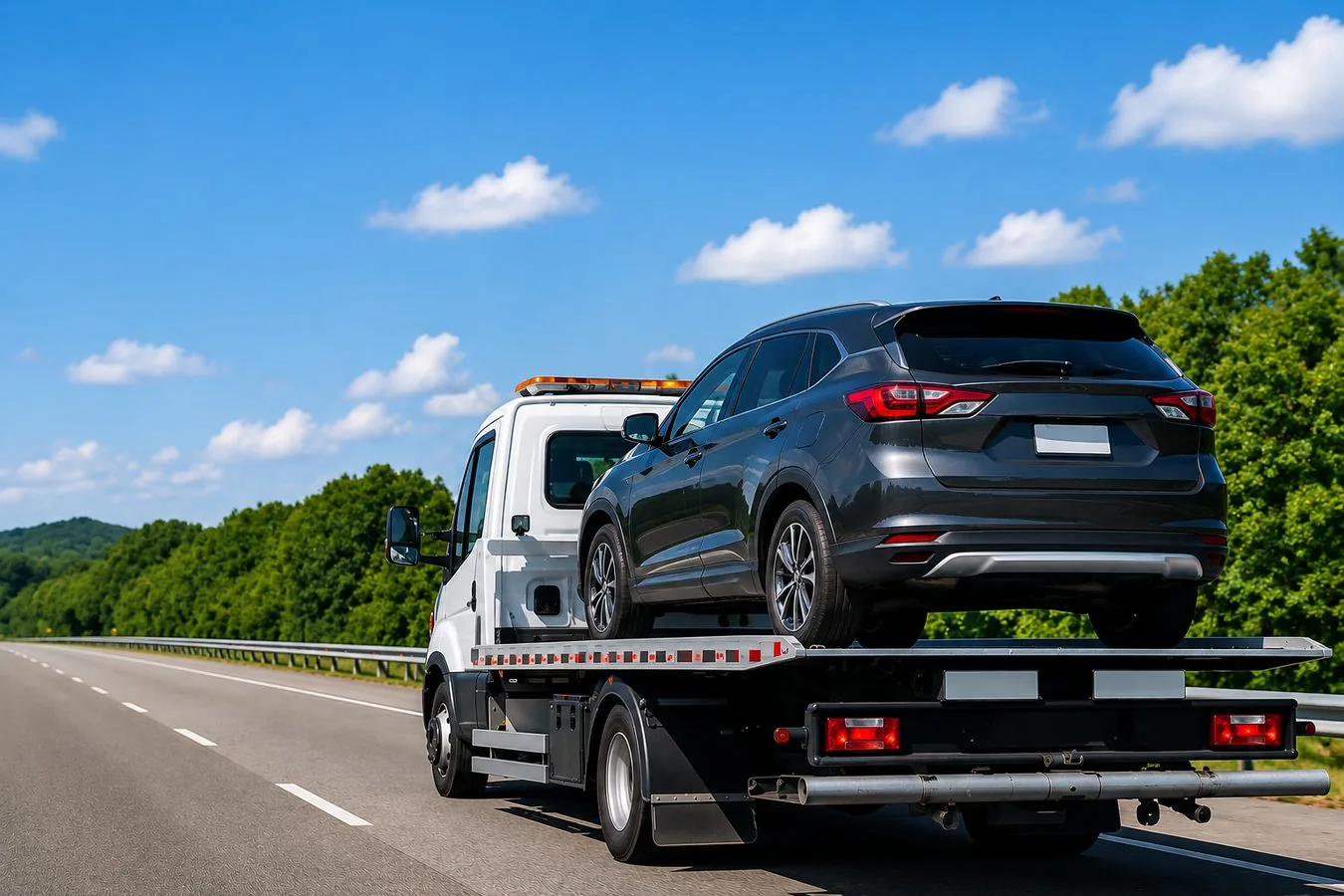
A dying car battery rarely picks a convenient moment. It waits for the coldest morning in a Red Willow County January, or the hottest afternoon in the US-6 parking lot, and then it leaves you turning a key that just clicks. The good news is that a failing battery almost always warns you first — you just have to know what the warnings look like. Catch them early and you replace a battery on your own schedule. Miss them and you are standing next to your car on NE-25 waiting for a jump.
At McCook Towing we run jump-starts and battery calls across McCook, Indianola, Culbertson and Cambridge every week, and the story is almost always the same: the driver noticed something felt off days before the car finally quit. Here are the five signs worth paying attention to, why they happen out here on the Nebraska plains, and exactly what to do when your battery gives up.
Why Car Batteries Die Faster Around McCook
Southwest Nebraska is hard on batteries. The chemistry inside a lead-acid battery is sensitive to temperature, and McCook delivers both extremes — summer highs that bake the engine bay and cook off the electrolyte, then winter cold that thickens engine oil and forces the battery to work far harder just to crank. A battery that might last five years in a mild climate often gives up at three to four years here in ZIP 69001.
Short trips make it worse. If most of your driving is a few miles across town — home to the Red Willow County Courthouse, over to the store, back again — the alternator never runs long enough to fully recharge the battery. Every cold start pulls the charge down a little further than the short drive puts back. Over a winter, that slow drain shortens the battery's usable life and sets up the exact failure that leaves you stranded on a January morning.
Sign #1: A Slow Crank and a Clicking Starter
The most reliable warning sign is the sound the engine makes when you turn the key. A healthy battery spins the starter briskly and the engine catches almost immediately. A dying battery makes the starter labor — a slow, dragging rrr-rrr-rrr that takes longer each cold morning. When the battery is nearly gone, you get a rapid clicking instead of a crank, because there is enough charge to trip the starter solenoid but not enough to turn the engine over.
If your car has started sounding sluggish, do not wait for it to click. That slow crank is the battery telling you it is on the way out, and it usually gets a few days' warning before it quits entirely. Get it tested, or plan a jump and a tow to a shop before it strands you.
Sign #2: Dim Headlights and Flickering Dash Lights
Your battery powers the electrical system whenever the engine is not running, and it steadies voltage while you drive. When it is failing, the first place you notice is the lights. Headlights that look dim at idle but brighten when you rev the engine are a classic symptom — the alternator is picking up slack the battery can no longer carry. Interior and dashboard lights that flicker, or a radio and power windows that feel weak, point the same direction.
On dark stretches of US-34 or US-83 outside town, dim headlights are more than an annoyance — they are a genuine safety problem. If your lights have lost their punch, treat it as an early battery warning and have the charging system checked.
Sign #3: The Battery or Charging Warning Light Is On
That little battery-shaped light on your dashboard is not just about the battery — it monitors the whole charging system, including the alternator and its belt. When it glows while you are driving, your car is running on stored charge that is not being replenished, and you may have only a short window before the engine stalls.
Do not ignore it and do not assume it will clear on its own. If the light comes on, drive straight to a shop while you still can, or pull over somewhere safe and call for a tow. According to the NHTSA, keeping your battery and charging system in good condition is one of the simplest ways to avoid a roadside breakdown. A flatbed tow to a mechanic is a lot cheaper than replacing an alternator you burned out by driving it dead.
Sign #4: A Swollen Case, Corrosion, or a Rotten-Egg Smell
Sometimes the battery shows its age physically. Pop the hood and look at it. A case that looks bloated or swollen means the battery has been overheated — often by McCook's summer heat combined with overcharging — and the internal plates are failing. White or bluish crust around the terminals is corrosion, which chokes off the connection and mimics a dead battery even when there is charge left.
The most serious warning is smell. A dying or overcharged lead-acid battery can leak, and if you catch a whiff of rotten eggs — that is sulfur, from the acid inside — the battery is venting gas and needs to be replaced immediately, not jumped. Do not lean over it or smoke near it. Call for service and let a technician handle a venting battery safely.
Sign #5: Your Battery Is More Than Three or Four Years Old
Age alone is a warning. Most batteries carry a date sticker or a code stamped on the case; if yours is pushing past three years in this climate, it is living on borrowed time even if it still starts fine today. Batteries rarely fail gradually at the very end — they hold on, then quit all at once on the first hard cold snap.
If you cannot remember the last time it was replaced, that is your answer: get it load-tested. A quick test at a shop tells you whether it is holding its rated cold-cranking amps or whether you are one frosty morning away from a no-start. Replacing a suspect battery on a warm afternoon is a five-minute errand. Replacing it after it dies on US-6 is a tow.
What to Do When Your Battery Finally Dies in McCook
If you turn the key and get nothing but a click, stay calm and stay with your vehicle. If you are on the shoulder of US-34, US-83 or NE-25, turn on your hazards and keep well clear of traffic. A jump-start will usually get you moving again — but remember that if the battery is genuinely dead rather than just drained, it may not hold a charge long enough to get you home, and pushing a failing alternator can leave you stranded a second time.
That is where a call to a local, licensed and insured towing company saves the day. McCook Towing carries the gear to jump most vehicles on the spot, test whether the battery will hold, and if it will not, load your car on a flatbed or wheel-lift and get it to the shop of your choice. We serve McCook, Indianola, Culbertson, Cambridge, Trenton, Bartley, Danbury and Curtis around the clock, so you are never stuck waiting until morning.
Dead Battery? We'll Get You Rolling
24/7 jump-start, battery service and flatbed towing across McCook and Red Willow County. Fast, licensed and insured, DOT compliant.
Call (615) 241-0232Frequently Asked Questions
How long do car batteries last in Nebraska?
Most car batteries last three to five years, but the hot summers and sub-zero winters around McCook and Red Willow County tend to shorten that to about three to four years. If your battery is past three years old and showing warning signs, have it tested before it strands you.
Can you jump-start a dead battery in McCook, NE?
Yes. McCook Towing provides 24/7 jump-start and battery service across McCook, Indianola, Culbertson, Cambridge and the rest of Red Willow County, typically arriving in 30 to 45 minutes. If the battery will not hold a charge, we can also tow your vehicle to a shop. Call (615) 241-0232.
When was the last time you had your battery tested — and do you know how old it is right now?